


SpeakUp AI - Language Learning
4.87.00 Reviews
App Specs
- Version
- 1.2.5
- Updated On
- License
- Free
- Downloads
- 500,000+
- Developer
- Growly
- Categories
- Education
- Platform
- Android
Screenshots

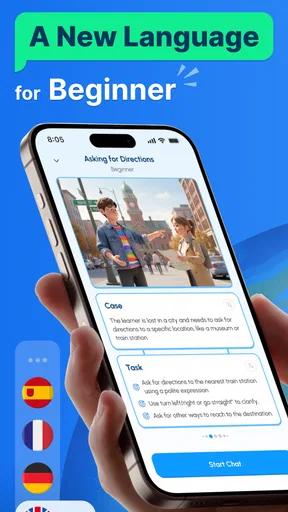

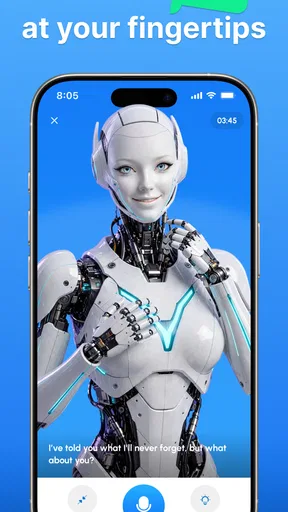
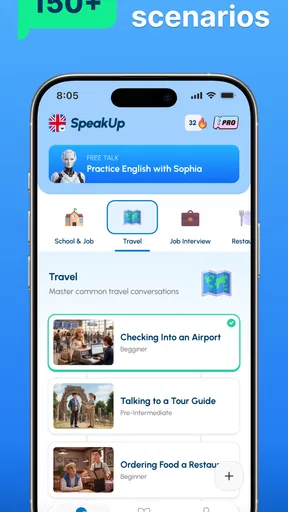
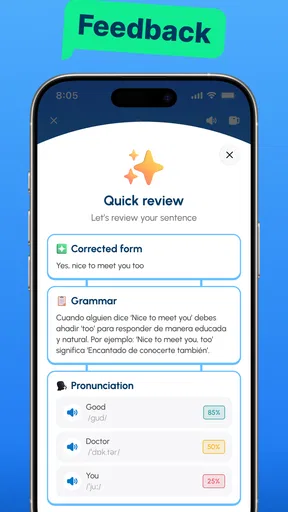
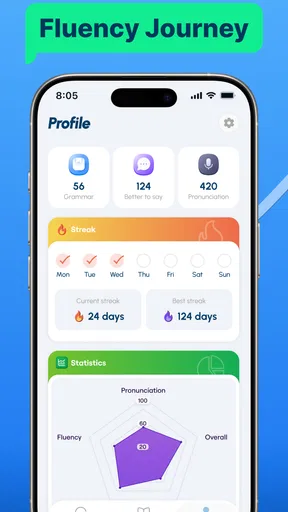
 Analysis by AppCompare
I tried SpeakUp AI as a practical language-learning companion rather than treating it like a collection of flashcards. Its main idea is simple: you speak in English or Spanish, receive feedback, and keep the exchange moving with artificial intelligence. That makes it feel closer to a low-pressure conversation partner than a traditional lesson app. For anyone who understands written language but freezes when it is time to answer aloud, that difference matters.
Developed by Growly, this free education app is aimed at everyday speaking practice. It is available to users rated Everyone, runs on Android 7.0 and later, and its current version is 1.2.5. The app has built a 4.7 average from around 1.9 thousand ratings and has passed 500 thousand installs, which suggests that the conversation-first approach is connecting with a sizeable audience. I would still judge it by the quality of the practice itself, because a large user base cannot replace a good learning routine.
How SpeakUp AI feels in everyday use
The most useful way to approach SpeakUp AI is to stop expecting a complete language course. I found its value in the moments between formal study sessions: rehearsing a sentence before a trip, getting comfortable with a question I might hear at work, or simply forcing myself to produce language instead of silently recognizing it. The app’s real-time conversation and feedback make those moments active rather than passive.
That distinction separates it from many familiar alternatives. Flashcard apps are excellent for reviewing vocabulary, grammar platforms are often better at explaining rules, and video-based courses can provide clearer examples of pronunciation and context. SpeakUp AI focuses on the uncomfortable middle step: forming a response quickly and seeing whether it communicates naturally enough to continue.
I especially liked the lower social pressure. Speaking with another learner can feel embarrassing when both people are searching for words, while speaking with a teacher may be too expensive or difficult to schedule regularly. An AI conversation removes some of that tension. I could try an answer, notice where I struggled, and try again without worrying about slowing down another person.
That does not mean the experience replaces a human tutor. A tutor can understand personal goals, notice recurring habits across lessons, and explain why one expression sounds more suitable than another. SpeakUp AI is better viewed as a practice layer that helps you arrive at a lesson more prepared, or makes sure you keep using the language on days when a lesson is not possible.
A realistic routine for busy learners
Imagine preparing for a short business trip to an English-speaking country. Rather than memorizing a long list of isolated phrases, I would use the app to rehearse a sequence: introducing myself, asking someone to repeat information, explaining a problem at a hotel, and answering a basic question about my work. The important part is not merely remembering the words. It is learning to retrieve them while responding to a changing prompt.
Worth Reading Before You Choose

Flipboard Shows What News Apps Must Do Beyond the Feed

Switching to Android Auto Means Rethinking Your Driving Routine

Google Calendar Makes a Crowded Week Easier to Manage

Ludo King Makes the Most of the Minutes Between Plans

Baby Panda World Brings Quick Play to Modern Phones, but Its Game Library Feels Busy

ESPN’s Live Game View Makes Following Close Games Easier
After that practice, I would write down two or three moments where I hesitated. Those are more valuable than every mistake in the session, because they show exactly what deserves attention. I might then review the relevant vocabulary elsewhere and return to SpeakUp AI to use it in a fresh exchange. This two-step workflow is stronger than relying on conversation alone.
For Spanish learners, the same routine works in reverse. A beginner can rehearse ordering food or greeting a host, while an intermediate learner can use the conversation to test whether a familiar sentence comes out smoothly under pressure. The app is most useful when the topic has a clear purpose. Wandering through random conversation can be enjoyable, but purposeful repetition produces more noticeable progress.
What the current version adds to the experience
The current release, version 1.2.5, is the clearest reference point for someone deciding whether to start now. I would not treat the version number as proof of a particular new feature unless the app itself explains it in context. What it does tell me is that SpeakUp AI is being presented as an actively maintained product rather than an abandoned experiment.
That matters for a conversation app because small refinements can affect the whole experience. A smoother exchange, clearer feedback, or better handling of an interrupted answer can make practice feel natural instead of mechanical. At the same time, I would keep expectations measured: a current version does not automatically mean that every language-learning need has been solved.
The release date shown for the app is June 23, 2026. I see that as useful context when interpreting the product’s current state. A relatively new app can have a focused central idea without yet offering the depth of an established course. That is not necessarily a weakness, but it changes how I would use it. I would adopt it for speaking practice first, then keep another resource for structured grammar, reading, or long-term curriculum planning.
The important change in perspective is this: SpeakUp AI is a speaking tool before it is a full school. If future updates expand the range of situations, improve feedback clarity, or make practice easier to organize, those changes could substantially increase its value. For now, the strongest case remains regular conversation and immediate correction rather than a complete path from beginner to advanced fluency.
Who benefits most from the feedback
Real-time feedback is most helpful when I use it as a prompt for reflection, not as an unquestionable judge. If the app marks a sentence as needing improvement, I want to ask myself what caused the problem. Was I missing a word, translating directly from my first language, using the wrong tense, or simply speaking too quickly? That habit turns feedback into learning instead of a pass-or-fail result.
A useful technique is to repeat the same idea in three forms. First, I say it naturally, even if it is imperfect. Next, I adjust the wording based on the feedback. Finally, I say it again without looking at the earlier response. This exposes whether I actually learned the correction or only recognized it for a moment. It is a small workflow, but it makes an AI conversation considerably more productive.
I would also avoid trying to correct everything at once. If I focus on pronunciation, vocabulary, word order, and speed during every exchange, the practice becomes tiring and I may stop speaking freely. Choosing one priority per session gives the feedback a clear purpose. One day can be about asking questions; another can be about past-tense stories or polite requests.
For shy learners, the app’s greatest benefit may arrive before accuracy improves. Speaking repeatedly reduces the shock of hearing one’s own voice in a second language. That confidence is not a minor extra. It can determine whether someone actually uses English or Spanish outside the app. Still, confidence should eventually be tested with real people, because human conversations include accents, interruptions, emotion, and unexpected wording that an AI exchange may not fully reproduce.
Where it is less convincing
The biggest limitation is built into the format. An AI conversation can respond quickly and keep practice available, but it may not provide the same depth of explanation as a dedicated teacher or grammar course. If I want a careful lesson on why a construction works, a structured educational platform is likely to be clearer. SpeakUp AI helps me use language; it is not automatically the best place to study every rule.
I also would not choose it as my only resource if I need strong reading and writing development. Speaking practice can improve retrieval and confidence, but it does not by itself guarantee that I will understand longer texts, write organized paragraphs, or recognize formal language. Learners preparing for an exam should combine it with materials that match the exam’s format.
There is another trade-off in AI feedback: convenience versus nuance. A correction may improve a sentence while leaving questions about tone, regional preference, or context. Two expressions can both be understandable, yet one may sound warmer, more formal, or more natural in a particular country. I would treat the app’s suggestions as useful guidance and verify important professional or academic wording through a trusted human or reference source.
Some users may also dislike the lack of human unpredictability. If your main motivation comes from social interaction, a language exchange group or tutor can be more rewarding. SpeakUp AI is a better fit for people who want immediate practice without coordinating schedules. It is not the right choice for someone who expects personal mentorship, cultural discussion, or a teacher who remembers their individual history.
How to combine it with other learning methods
I get better results when I give the app a narrow job. I might learn ten useful words from a textbook, then use SpeakUp AI to place those words into spoken answers. Alternatively, I can record the kinds of sentences I need for daily life and use the app to rehearse them until they stop feeling like translations. This makes the tool part of a system rather than another disconnected activity.
For vocabulary, spaced review remains valuable. New words disappear quickly when they are only encountered once in conversation. I would keep a short list of expressions that caused hesitation, review them later, and then return to speaking. The app supplies the pressure to retrieve language; another method can supply the repetition needed to retain it.
For pronunciation, I would listen carefully to the feedback but avoid chasing perfection on every sound. Clear communication is the first target. If a particular sound repeatedly causes confusion, that is a good reason to practice it separately with audio examples and then test it again in conversation. The app can reveal the problem, while focused pronunciation work may be needed to solve it.
For grammar, I would use the conversation as a diagnostic. If I repeatedly struggle with past events, comparisons, or questions, I can study that topic directly instead of guessing. This is one of the less obvious strengths of a speaking-first app: it shows which rules fail when I have to use them quickly, not merely when I complete a written exercise.
Who should start, and who should choose something else
I recommend SpeakUp AI to beginners who know a few basic words but need a safe place to start speaking, and to intermediate learners who understand more than they can produce. It is also a sensible choice for travelers, remote workers, students with irregular schedules, and anyone who wants short practice without arranging a lesson. Because it is free, the barrier to trying this routine is low.
I would be more cautious if you need a carefully sequenced course with visible milestones. A conversation partner can help you practice, but it may not tell you what to learn next in the same orderly way as a curriculum. In that case, I would choose a structured course as the main resource and use this app as an extra speaking room.
Advanced learners should consider whether the available conversation depth matches their goals. If you need specialized legal, medical, academic, or industry language, general practice may not be enough. The app could still help with fluency, but targeted materials and expert correction would be more appropriate for high-stakes communication.
Parents should also think about supervision and learning habits, even though the content rating is Everyone. A child-friendly age rating does not turn any app into a complete teaching plan. I would set a clear purpose for each session and check that the learner understands feedback rather than simply repeating whatever the system suggests.
What existing users should expect from its evolution
Someone already using SpeakUp AI will probably notice its value most when it becomes part of a dependable routine. The current version gives users a stable point from which to judge whether the conversation format suits them. Rather than chasing every update, I would track practical outcomes: Can I answer more quickly? Do I hesitate less in familiar situations? Am I using a wider range of expressions?
Those questions are more meaningful than counting sessions. A short, focused exchange that leads to a corrected sentence I can use later may be more valuable than a long conversation where I remain passive. Existing users can get more from the app by saving recurring trouble spots and deliberately returning to them after a day or two.
New users should give themselves enough time to adjust to speaking with an AI. The first session can feel artificial, especially if you are used to tapping answers in other learning apps. I found that the experience makes more sense once I stop trying to sound perfect and instead treat each response as a quick experiment. The goal is to produce language, notice the gap, and try again.
What I would watch in future updates
If I were following SpeakUp AI over time, I would watch for improvements in the quality and usefulness of feedback rather than simply more conversation topics. The most valuable progress would be feedback that explains the reason behind a correction, distinguishes serious errors from natural alternatives, and helps learners recognize patterns across several exchanges.
I would also look for stronger support around progression. Speaking practice is easier to sustain when users can see which situations they have rehearsed and which weaknesses keep returning. Clear organization could turn an enjoyable conversation tool into a more dependable part of a long-term study plan.
Another area worth watching is balance between convenience and authenticity. AI should remain easy to access, but learners also need exposure to varied human speech and real conversational pressure. Any future development that helps users move from private practice to confident interaction would make the app more useful without abandoning its central strength.
My final view is positive but specific. SpeakUp AI is worth trying if your main obstacle is speaking out loud. It gives English and Spanish learners a practical way to rehearse responses, use new vocabulary under pressure, and build confidence without scheduling a person. I would not use it as my entire language education, and I would not expect it to replace a tutor, a grammar course, or real conversation. Used alongside those resources, though, it fills a gap that many learners feel every day: knowing what a sentence means but struggling to say it when the moment arrives.
Pros
- Personalized AI conversation practice for more confident speaking.
- Instant feedback helps identify pronunciation and grammar mistakes.
- Useful for practicing anytime without scheduling a human tutor.
- Supports self-paced learning for different experience levels.
- Short interactive exercises make daily practice easy to maintain.
Cons
- AI feedback may occasionally misunderstand accents or intended meaning.
- Some advanced lessons and features may require a paid subscription.
- Conversation practice cannot fully replace real human interaction.
- Progress can feel limited without consistent daily practice.
- Requires a stable internet connection for most AI-powered features.
FAQs for SpeakUp AI - Language Learning
What is SpeakUp AI - Language Learning and how does it work?
SpeakUp AI - Language Learning is designed to help users practice speaking and improve their language skills through interactive lessons and AI-supported conversations. After selecting a target language, you can typically work on vocabulary, pronunciation, grammar, and everyday dialogue. The app is most useful when you practice regularly, respond aloud, and review corrections instead of treating it as a replacement for a complete language course.
Which languages can I learn with SpeakUp AI?
The available languages may depend on the version of SpeakUp AI, your device, and the app’s current content library. Before downloading, check the language list shown on the official Google Play Store or App Store page. It is also worth confirming whether your preferred language supports all features, such as speaking practice, pronunciation feedback, conversation exercises, and structured lessons, because support can vary between languages.
Is SpeakUp AI suitable for complete beginners?
SpeakUp AI can be useful for beginners because AI-guided practice allows learners to start with basic phrases, common vocabulary, and simple conversations at their own pace. However, new learners should not expect every explanation to replace a teacher or a structured textbook. Begin with introductory exercises, speak slowly, and repeat lessons frequently. Users with some previous knowledge may benefit more from its conversational practice and correction features.
Does SpeakUp AI require a subscription or include in-app purchases?
SpeakUp AI may offer free content alongside premium lessons, usage limits, or subscription-based features. Pricing, trial periods, renewal terms, and available plans can change, so review the purchase screen carefully before confirming payment. Pay attention to whether a free trial automatically converts into a paid subscription and learn how to cancel through your Google Play or Apple account settings if you decide not to continue.
Does SpeakUp AI work offline, and what permissions does it need?
AI language-learning apps commonly require an internet connection because conversations, speech processing, corrections, or lesson content may be handled online. Some downloaded material might remain available offline, but you should verify this inside the app rather than assume full offline access. SpeakUp AI may also request microphone permission for speaking exercises and other standard permissions. Only grant access needed for the features you intend to use.


